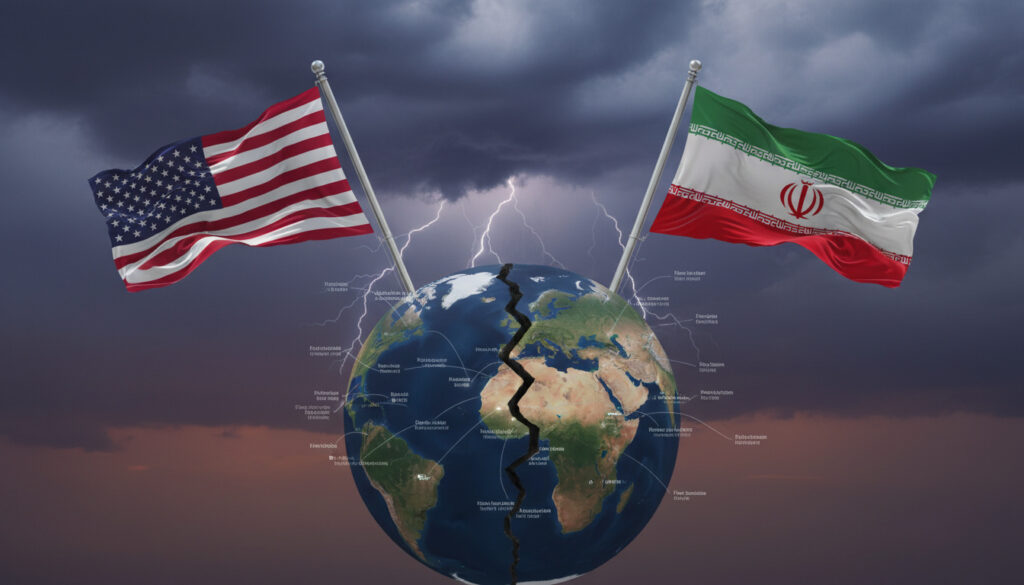
Iran US Latest News – آخر التطورات بين إيران وأمريكا
Intro
Washington and Tehran remain locked in a precarious diplomatic standoff as indirect negotiations over Iran’s nuclear program yield little tangible progress. The Biden administration faces a narrowing window to secure constraints on Iran’s uranium enrichment activities, which now sit at 60% purity—just shy of weapons-grade levels—while regional tensions in the Red Sea and Lebanon complicate any pathway to de-escalation. Both capitals publicly maintain they seek diplomatic solutions, yet the gap between their foundational demands continues to widen, leaving the Middle East bracing for prolonged uncertainty.
Grid
Nuclear Threshold: Iran’s stockpile of 60%-enriched uranium has grown significantly, shrinking the breakout timeline to mere weeks according to international atomic monitors. Tehran insists its program remains strictly civilian, but the technical capacity now exists to escalate rapidly if political orders follow.
Regional Proxies: The Houthis’ sustained attacks on commercial shipping in the Red Sea have drawn retaliatory US strikes, while Hezbollah’s entanglement in Lebanon’s border conflict with Israel creates additional friction. These flashpoints limit Washington’s willingness to offer sanctions relief absent broader behavioral changes.
Sanctions Architecture: The US Treasury continues targeting Iran’s oil exports and petrochemical networks, choking off revenue streams that Tehran desperately needs to stabilize its currency and import essential goods. Enforcement has tightened noticeably since October.
Diplomatic Channels: Oman and Qatar serve as critical intermediaries, facilitating messages between hostile capitals that refuse direct contact. This backchannel has prevented outright military confrontation but has failed to bridge the core dispute over enrichment limits and sanctions removal sequencing.
Insights
Veteran diplomats familiar with the Oman channel suggest both governments privately prefer managed tensions to open conflict, yet domestic political constraints preclude the concessions necessary for a breakthrough. In Washington, the administration fears appearing weak on Iran ahead of electoral cycles, while Tehran’s leadership cannot afford to be seen as capitulating to Western economic pressure. This dynamic creates a dangerous stability—neither war nor peace—where miscalculation remains the primary threat.
The regional security dynamics further complicate bilateral talks. Gulf Arab states, notably Saudi Arabia and the UAE, have pursued their own détente with Tehran, reducing their reliance on American security guarantees while maintaining economic ties with both powers. This hedging strategy limits Washington’s leverage, as regional solidarity on maximum pressure has fractured.
Table
| Date | Development | Strategic Impact |
|---|---|---|
| October 2024 | Iran increases enrichment to 60% at Fordow facility | Shrinks breakout timeline; triggers Israeli anxiety |
| November 2024 | US Treasury sanctions 20+ oil smuggling entities | Reduces Iranian export capacity by estimated 15% |
| December 2024 | Indirect talks resume in Muscat via Omani mediation | Maintains communication line but yields no agreement |
| January 2025 | Houthi missile strikes target US vessels in Gulf of Aden | Escalates military tensions; complicates diplomatic track |
Details
The technical specifics of Iran’s nuclear advancement now dominate strategic calculations. At 60% enrichment, Tehran possesses sufficient fissile material that, if further enriched to 90%, could theoretically fuel multiple warheads. However, weaponization requires additional engineering milestones—specifically, the design of viable delivery systems and miniaturization of payloads—that intelligence agencies assess would require six months to two years to complete.
Washington’s response relies heavily on economic warfare rather than military options. The most recent sanctions package targets shadow banking networks that have allowed Iran to move billions in oil revenue through Southeast Asian financial institutions. Treasury officials claim these measures have reduced Iranian oil exports to their lowest levels since 2020, though independent tanker tracking suggests significant smuggling persists via ship-to-ship transfers in the Persian Gulf.
Timeline
- September 2024: Iran publicly confirms installation of advanced IR-6 centrifuges at Natanz, accelerating enrichment capacity.
- October 2024: The International Atomic Energy Agency reports Iran’s 60% stockpile has reached 164 kilograms, a threefold increase from January.
- November 2024: US Defense Secretary approves additional Patriot missile deployments to Saudi Arabia following Iranian threats.
- December 2024: Technical experts meet in Geneva to discuss “nuclear risk reduction” measures separately from comprehensive deal negotiations.
- January 2025: Cyberattacks attributed to Iranian Revolutionary Guard Corps target water infrastructure in Pennsylvania, prompting FBI countermeasures and renewed Congressional calls for retaliation.
Clarity
Breakout Time: This refers to the duration required to produce sufficient weapons-grade uranium for one nuclear device. Currently estimated at two to three weeks for Iran, this metric represents theoretical capacity rather than actual weaponization.
JCPOA: The Joint Comprehensive Plan of Action (2015) capped Iranian enrichment at 3.67% in exchange for sanctions relief. The US withdrew unilaterally in 2018, prompting Iran’s gradual violation of limits. Current talks do not seek full JCPOA restoration but rather an interim “less for less” arrangement.
Maximum Pressure: The Trump-era sanctions regime maintained by the Biden administration, targeting Iran’s oil, banking, and manufacturing sectors to force diplomatic concessions through economic strangulation.
Analysis
The strategic calculus for both nations increasingly favors confrontation management over resolution. For Washington, the economic cost of military strikes—potentially triggering region-wide conflict involving Hezbollah’s 150,000 rockets and Houthi anti-ship missiles—outweighs the benefits of delaying Iranian nuclear advancement by two to three years. Conversely, Tehran recognizes that crossing the weapons threshold would likely trigger Israeli or American bombing campaigns, destroying its industrial infrastructure without guaranteeing regime survival.
However, the status quo erodes American influence in the Gulf. Washington’s Middle East strategy faces skepticism from traditional allies who observe the US simultaneously demanding containment of Iran while reducing military commitments to the region. This credibility gap drives Gulf states toward independent diplomacy, including direct investment in Iranian infrastructure to secure non-aggression understandings.
The Pentagon’s force posture reflects this ambiguity—sufficient assets exist to defend shipping lanes and allied territory, but not to mount sustained offensive operations against hardened Iranian nuclear sites. Military planners reportedly assess that only bunker-buster munitions capable of penetrating Fordow’s mountainous fortifications could meaningfully degrade the program, requiring basing access that regional partners currently refuse to guarantee.
Quotes
“We are not seeking war, but we will not blink if attacked. The nuclear program is irreversible; the only question is whether it remains peaceful.”
— Iranian Foreign Minister, speaking via Omani intermediary, December 2024
“Iran is at a decision point. They can continue down the path of nuclear escalation and face severe consequences, or they can accept verifiable limits that the international community can verify.”
— US Secretary of State, remarks at Atlantic Council, January 2025
Summary
The Iran-US relationship remains defined by a mutual interest in avoiding direct war coupled with an inability to compromise on core demands. Tehran seeks sanctions relief as a prerequisite for nuclear constraints, while Washington demands nuclear rollback before offering economic normalization. Indirect talks prevent accidental escalation but show no signs of resolving the fundamental impasse. As Iran’s nuclear capabilities mature and regional proxy conflicts persist, the risk of miscalculation—rather than deliberate choice—poses the gravest threat to global energy markets and regional stability.
FAQ
How close is Iran to developing a nuclear weapon?
Tehran has enriched uranium to 60% purity, which is technically close to weapons-grade (90%), but weaponization requires additional engineering for delivery systems and warhead design. Intelligence estimates suggest Iran could produce sufficient fissile material for a device within weeks, but actually deploying a functional weapon would likely take six months to two years.
Are the US and Iran currently negotiating directly?
No. All diplomatic communication occurs through intermediaries, primarily Oman and Qatar. US and Iranian officials refuse to meet face-to-face due to unresolved grievances dating to the 1979 revolution and the recent killing of Iranian military commanders.
What triggered the recent escalation in tensions?
The primary drivers include Iran’s decision to accelerate uranium enrichment to 60%, the expansion of Houthi attacks on Red Sea shipping linked to the Gaza conflict, and tightened US sanctions enforcement targeting Iran’s oil export networks. Each action has prompted countermeasures, creating a spiral of antagonism without direct military engagement between the principals.
Could sanctions alone stop Iran’s nuclear program?
Economic pressure has constrained Iran’s oil revenues and currency stability, but historically it has not prevented centrifuge installation or uranium enrichment. Iranian leaders have consistently prioritized the nuclear program over economic welfare, subsidizing strategic industries through deficit spending and smuggling networks that evade sanctions.
مقالات إضافية ذات صلة
 الإمارات تغلق مجالها الجوي: آخر التحديثات لعام 2026
 Mumbai to Abu Dhabi Flight – أفضل الأوقات والأسعار
 أفضل أنمي للمشاهدة: دليل شامل 2026
 كأس العالم تحت 19 سنة 2026: النتائج الكاملة والبطل والمشاهدة
 الخط الزمني لمواجهات مومباي إنديانز وراجاستان رويالز
 2026 Men’s T20 World Cup – موعد ملاعب فرق وجدول البطولة
 مكالمة فيديو مع الفتيات: دليل التطبيقات والنصائح
 تشكيلة ريال مدريد وفياريال: موعد وقنوات المباراة